Contents
- The map in one table
- Federation and company: the most important difference
- World Triathlon
- Continental confederations
- National federations: examples from four continents
- The IRONMAN Group
- Challenge Family and Roth
- PTO, T100 and the Triathlon World Tour
- Supertri, XTERRA and the extreme races
- Local and independent races
- A license: do you need one?
- Age groups
- Three different world championships for age-group athletes
- Whose rules apply on the course
- What this means for you
- Frequently asked questions
The map in one table
As of November 2026. This year changed the ownership picture a great deal, so older articles may be out of date.
| Name | What it is | Owner or authority | What it means for an age-group athlete |
|---|---|---|---|
| World Triathlon (formerly ITU) | World federation, Lausanne | More than 170 national federations, president Antonio Arimany | Rules, the Olympic Games, age-group world championships |
| Continental confederations | Five regional bodies under World Triathlon | The national federations of each region | Continental cups and championships, age-group ones included |
| National federations | Members of World Triathlon, one per country | Clubs and individual members | Licenses, insurance, national championships, places on the national age-group team |
| The IRONMAN Group | Private company | Advance | IRONMAN, 70.3, Kona, qualification through slots |
| PTO | Company and professionals' organization | Athletes and investors, SURJ among them | T100, and from 2027 the Triathlon World Tour with the federation |
| Challenge Family | Race series | Majority owned by the PTO since February 2026 | Some events become T100 Challenger races |
| Challenge Roth | Independent full-distance race | The Walchshöfer family, TEAMCHALLENGE | No change after the PTO deal |
| Supertri (formerly Super League) | Company, short and mass-participation races | Private, CEO Michael D'hulst | Mass sprints in the United States, Canada, Great Britain and France |
| XTERRA | Off-road series | XTERRA Sports Unlimited | Triathlon with a mountain bike leg and a trail run |
| Local organizers and clubs | Independent races, sanctioned by a federation or not | Clubs, towns, private companies | Most first races. Whether you need a license depends on the sanction |
Federation and company: the most important difference
A federation is a membership organization. It sets the rules, selects national teams and runs the road to the Olympic Games. Licenses help pay for its work, but it does not sell you a brand.
A company sells a product: a brand, a medal, an atmosphere, a qualification. It operates within the law, its contracts and its own rules. That is why IRONMAN can have a different wetsuit limit from the federation, and why Kona is not a world championship in the sense used by Olympic sport. The 1998 agreement described in the history of triathlon lets the company use the name as a trademark, but without claiming that it is a championship governed by the federation.
The difference stops being abstract when you ask one of three things:
- whether you need a license,
- whose rules apply on the course,
- which title you can win and whom you have to go through.
World Triathlon
It is the only world triathlon federation recognized by the IOC. It has been based in Lausanne since 2014 and worked from Vancouver before that. Until October 2020 it was called the International Triathlon Union. Do not confuse it with the World Triathlon Corporation, which for years was the name of the company behind the IRONMAN brand. Its president since 2024 is Antonio Fernández Arimany of Spain.
What it is responsible for:
- the Competition Rules, on which national rule books are based,
- the Olympic and Paralympic program, and so the road to the Los Angeles Games,
- world championships for elite athletes and age groups, also in duathlon, aquathlon, aquabike and cross triathlon.
The age-group world championships are not open entry. You get there through your national federation, as a member of its age-group team. In 2026 they were held in Pontevedra in late September. For 2027 the calendar puts the championship finals in Hamburg on September 8–12 and the Multisport World Championships in Edmonton in the second half of July.
Continental confederations
Five regions work under World Triathlon: Africa, the Americas, Asia, Europe and Oceania. The largest is Europe Triathlon with 46 federations. Its president is Marc D'hooge of Luxembourg.
Europe Triathlon grew out of the European Triathlon Union, founded in Almere by ten countries in 1984. It runs the Europe Triathlon Cup and the European championships. The other confederations do the same for their regions, with continental cups that serve as the first international step for young professionals. For an age-group athlete the continental age-group championships matter most. In Europe in 2026 they were held in Tarragona (standard and sprint) and in Banyoles (duathlon, aquathlon, cross triathlon and middle distance, among others). Entry works the same way as for the world championships: through your national federation.
National federations: examples from four continents
Your national federation is the body you will actually deal with. It issues licenses, insures sanctioned races, trains technical officials, runs national championships and picks the age-group team. Its rules are based on World Triathlon's, with local differences.
| Federation | Notes | If you are not an annual member |
|---|---|---|
| USA Triathlon | Founded in 1982. 303,000 active members and 829 sanctioned events (2025) | One-day license for 14.99–34.99 dollars, or annual membership from 69.99 dollars |
| British Triathlon | Founded in 1982. Works through Home Nation associations such as Triathlon England and Triathlon Scotland | A Race Pass, the successor of the old day membership, bought for each permitted event. The federation says residents of other countries do not need one |
| Triathlon Ireland | Suggests full membership if you plan three or more races in a season | One Day Membership: 24 euros for a Try-a-Tri, duathlon, aquathlon or aquabike, 36 euros for sprint, standard and middle distance, 42 euros for long distance |
| AusTriathlon (Australia) | Known as Triathlon Australia until 2023 | One Day Licence, priced by distance from enticer to long course |
| DTU (Germany) | Founded in 1985. 61,031 members in 1,533 clubs (2025) | The license of your own federation, or a DTU day license (Tageslizenz) |
| FFTRI (France) | Founded in 1989. Its predecessor was the committee CONADET of 1984 | Licence Expérience, bought for each race and priced by distance |
| FITri (Italy) | Asks athletes without a recognized license for a medical form | Day card: 10 euros for a sprint, 20 for the Olympic distance, 35 for middle and 45 for long distance |
| FETRI (Spain) | Founded in 1990 | Conditions are in the rules of each race |
| Triathlon South Africa | Sanctions road and off-road races through provincial associations | Annual license, or typically a temporary day license sold with the race entry |
Prices are those published by the federations in 2026, and they change every season. What the fee buys differs more than the price:
- The British Race Pass is a race license with public liability cover for that event only.
- The Irish One Day Membership adds personal accident cover while you race, but nothing in training.
- Some federations include no personal insurance at all in a day license.
None of these is travel or medical insurance. Abroad, the organizer decides whether your home license is accepted. The rules that apply in Germany, France and Italy are described in the registration guide.
The IRONMAN Group
The owner is Advance, a private, family-owned group known for Condé Nast. That is how the company describes itself today. Advance bought the group from China's Wanda Sports in 2020 for 730 million dollars, with Orkila Capital as co-investor in that deal. Wanda runs races in China under license. The chief executive since January 2024 is Scott DeRue, formerly president of Equinox. The group works in more than 50 countries and employs about 1,000 people in season. Beyond triathlon it owns the Rock 'n' Roll and City2Surf running events, the UTMB World Series of trail races and the Epic Series in mountain biking, with the Absa Cape Epic. The IRONMAN and 70.3 series alone has more than 170 qualifying races.
What it is responsible for: its own rule book, the choice of host cities, licenses for local operators, entry fees and places at its world championships. It is tied to World Triathlon by agreements, among them the 2017 memorandum on anti-doping and rules.
Only races licensed by this brand may use the names IRONMAN and 70.3. That is why races over the same distance run by others are called "long distance" or "middle distance". The IRONMAN World Championship returned to Kona in October 2026, with one day for women and men, and the 2027 edition is scheduled there as well. The 70.3 World Championship changes city: in 2026 it was Nice and in 2027 it will be Chattanooga in the United States.
In most countries the group runs its races itself, and in some a local company operates them under license. The practical details change with the country: the registration platform, the currency, the federation whose license you need. Read the athlete information of your edition, not a general guide. How registration, refunds and qualification work is covered separately: how to register for an Ironman.
Challenge Family and Roth
This is where it is easiest to get confused today. Challenge Family and Challenge Roth are two different things.
Challenge Family is a series of more than 35 races around the world, led by Jort Vlam. In February 2026 the PTO bought a majority stake from Y11 Sport & Media. Neither the size of the stake nor the price was disclosed. Challenge events run under their own brand until the end of 2026. In 2027, 15 of them form the T100 Challenger tier of the Triathlon World Tour, with the same organizers and host cities. Challenge Family says the Challenge brand stays with long distance.
Challenge Roth belongs to the Walchshöfer family through TEAMCHALLENGE GmbH. Felix Walchshöfer said after the deal that nothing changes for Roth, because these are two independent organizations. The race has had no link to the IRONMAN brand since 2002 and each year draws about 3,500 individual starters and 650–700 relay teams. The family invests the income in one event. Up to 300,000 spectators line the course.
For an age-group athlete this means two things. First, Roth remains the best-known full distance outside the IRONMAN system, but online registration for 2027 closed in under 20 seconds. Second, the market is moving toward two large blocs, and that does not point to lower prices.
PTO, T100 and the Triathlon World Tour
The Professional Triathletes Organisation (PTO) began as a body of professional athletes and became a market power. The commercial company was originally meant to belong half to the athletes. Today its capital comes from SURJ Sports Investment of Saudi Arabia, Cordillera, Verance Capital and Sir Michael Moritz, among others. The chief executive is Sam Renouf.
T100 is a professional series over 100 km: a 2 km swim, an 80 km bike and an 18 km run. World Triathlon recognizes it as the official world championship for long distance without drafting. In the 2026 season annual athlete contracts were dropped and individual rounds are for women only or men only, apart from the final in Qatar.
From 2027 everything comes together under the name Triathlon World Tour. This is not a merger. Renouf repeats that the federation stays independent and the PTO is its commercial partner. The world championship titles belong to World Triathlon and the PTO has the right to operate them. Arimany speaks of new income and higher prize money.
| Tier | Races in 2027 | What it is |
|---|---|---|
| T100 World Championship Tour | 8 | The former T100 series, final in Qatar on December 10–11 |
| T50 World Championship Tour | 9–10 | The former WTCS, final in Hamburg on September 8–12 |
| T100 Challenger | 15 | Former Challenge events, among them Wanaka, Šamorín and Salou |
| T50 Cup | 15–16 | Former World Cups, among them Karlovy Vary, Tiszaújváros and Munich |
The numbers differ between announcements, because the calendar is still being filled in. The aim is about 80–100 races a year. The organizers promise a broadcast, a professional field and mass-participation races for age-group athletes at every stop.
An age-group athlete gets one new thing from this system. There is now an age-group world championship under the T100 name. In 2026 it takes place at the series final in Qatar on December 10–12. You qualify with a top-ten place in your age group at a T100 mass race or through selection by your federation, and the place must be confirmed by the national federation. Unused places do not roll down, national team kit is mandatory and the entry fee is 595 dollars.
Supertri, XTERRA and the extreme races
Supertri is the former Super League Triathlon, founded in 2016 by Michael D'hulst and Chris McCormack with the backing of Leonid Boguslavsky. The new name came in during 2023 and 2024. Today it is first of all a company that runs mass sprints. Since 2026 all its races carry one brand, for example Supertri Chicago, and the list includes Toronto, Austin, Long Beach, Blenheim Palace and Toulouse. The professional side has shrunk to three qualifiers and a final with a purse of 800,000 dollars, won in Jersey in 2026 by Matthew Hauser and Cassandre Beaugrand.
A detail for age-group athletes: in 2026 in Austin and Toronto anyone could line up for the professional race, and a good result earned a place in the final.
XTERRA was born in 1996 on Maui as Aquaterra. The standard is a 1.5 km swim, 30 km on a mountain bike and an 11 km trail run. The brand is managed by XTERRA Sports Unlimited, which took over the operator TEAM Unlimited in 2017. Nissan was the title sponsor from 1998 to 2006 and named its off-road vehicle after the series. Do not confuse XTERRA with the federation's cross triathlon: the World Triathlon world championships in that discipline are a separate event, held in 2026 in Abu Dhabi, with places allocated by national federations.
Extreme triathlons form a third family: full-distance races in mountains and cold water with a support crew instead of aid stations. The best known is Norseman in Norway, part of the XTRI World Tour. Entry is by ballot: for the 2027 race it was open from October 1 to 11, 2026, and the organizers list 334 start slots in total. Some of those slots are reserved for athletes who qualify or collect points at other races of the tour.
Local and independent races
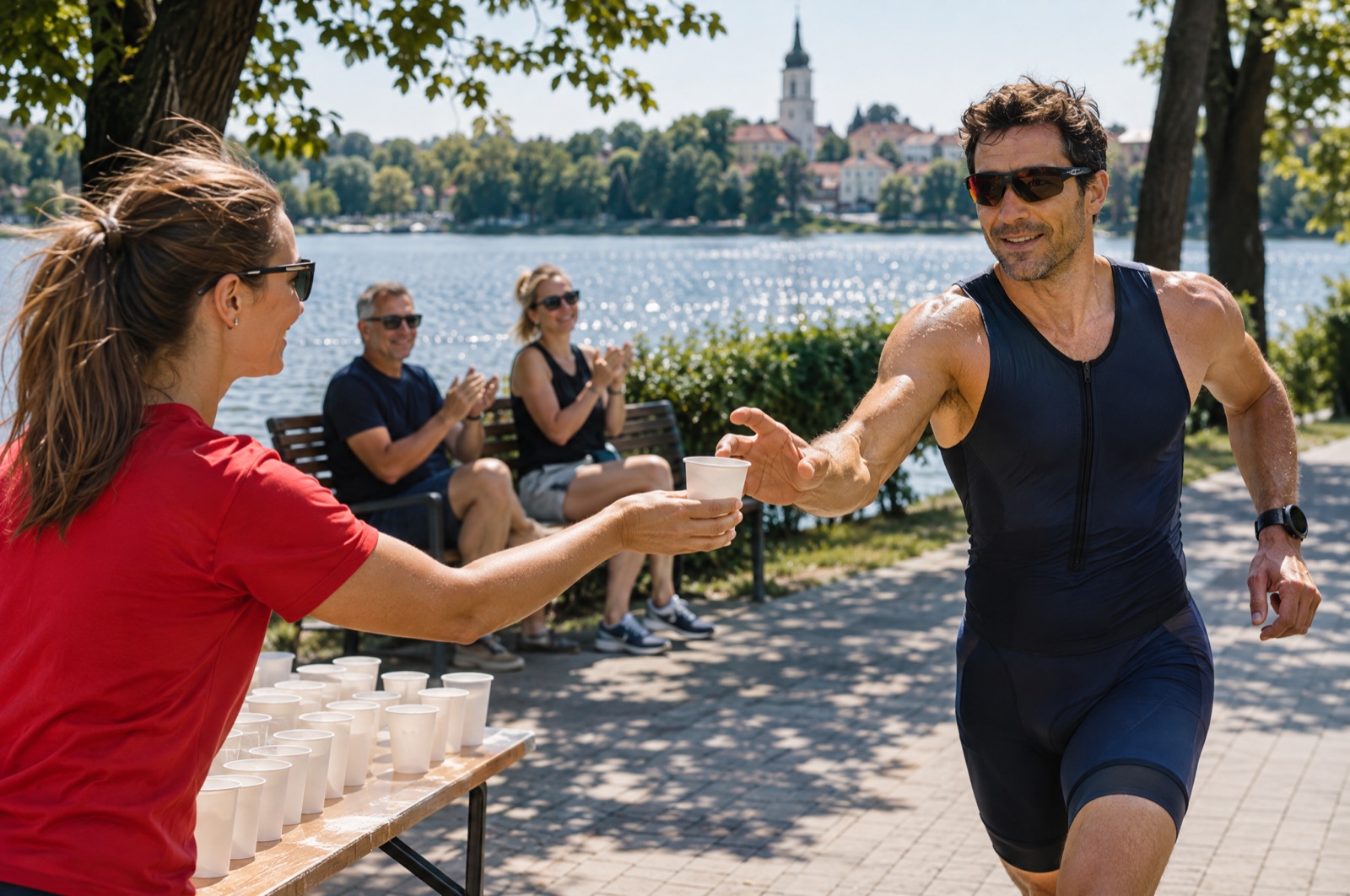
Most people do their first triathlon at none of the brands above. It is a race put on by a club, a town or a small company, with a few hundred starters, volunteers from the neighborhood and an entry fee that is a fraction of a 70.3. This layer is the largest part of the sport: the 829 events sanctioned by USA Triathlon alone in 2025 are mostly events of this kind.
| Type of race | Who stands behind it | What to check |
|---|---|---|
| Sanctioned local race | A club or company, with a permit from the national federation | License or day membership, the federation's rules, officials on the course |
| National championship or qualifier | An organizer chosen by the federation | Annual membership, entry conditions, whether the race is draft-legal |
| Independent long-distance race | A private organizer, often with decades of history | Its own rules, refund terms and cut-offs |
| Unsanctioned event | Anyone | Insurance, water safety, medical cover and who measures the course |
A sanction is not a formality. It means that the federation has looked at the safety plan, that technical officials apply a known rule book and that the race carries liability insurance. British Triathlon calls such races permitted events, USA Triathlon calls them sanctioned. An unsanctioned race can be perfectly good, but you have to ask the questions yourself.
Independent long-distance races are a category of their own. The Outlaw in England and Challenge Roth in Germany offer the full distance with their own entry systems and rules, and neither gives a slot for Kona. If the distance matters more to you than the brand, they can be the cheaper way to it, although the most famous ones sell out just as fast.
A license: do you need one?
The shortest answer: at a race sanctioned by a national federation, yes, in the form of an annual membership or a one-day license. As of November 2026.
| Your situation | What to choose | Why |
|---|---|---|
| One or two races a year | One-day license with each entry | Usually added in the registration form and valid for that event only |
| Three or more races at home | Annual membership | Around the third or fourth race it becomes the cheaper option, and in some federations it adds insurance in training |
| You want a place on the national age-group team | Annual membership | Required by federations for national championships and team selection |
| A race abroad or a brand race | Depends on the organizer | Your home license counts only where it is accepted. Otherwise you buy the host federation's day license |
| Relay | Check the rules of the race | Some races require a license from every member, some from one, some from none |
| Unsanctioned race | A license may not be required | Check what insurance, if any, is included |
A few details people ask about most often:
- A one-day license is tied to one event. It cannot be moved to another race or another person.
- Annual memberships do not all run by calendar year. Some are valid for 12 months from purchase. Check the expiry date against your race date.
- Some championships sell no day licenses. USA Triathlon's 2027 national championships, for example, are open to annual members only.
- A medical document may be part of the license. Italy asks athletes without a recognized license for a form signed by a doctor, and France uses a health questionnaire. Many other countries ask only for a signed waiver.
- A license is not health insurance. Buy a policy that covers organized sports events separately, above all when you travel.
- Licenses are generally non-refundable, also when you withdraw from the race.
Age groups
Age group, AG for short, simply means amateurs divided into five-year categories. The layout dates from the 1980s and is used almost everywhere today: 18–19 or 20–24 at the bottom, then 25–29, 30–34 and so on, for as long as there are finishers.
| World Triathlon minimum age | Distance |
|---|---|
| 15 | Super sprint |
| 16 | Sprint |
| 18 | Standard distance and longer |
Under World Triathlon rules your age is the age you reach on December 31 of the race year, not your age on race day. You can therefore race in an older category before your birthday. The category also matters for the wetsuit: from the 60–64 group upward the limit is more generous at shorter distances. National federations set their own categories for children and youth, and brand races publish theirs in the athlete guide.
Three different world championships for age-group athletes
| Title | Who awards it | How to get there | Cost in 2026 |
|---|---|---|---|
| Age-group world championships | World Triathlon | A place on your national age-group team, through your federation | Entry in Pontevedra was 216–330 euros, plus your federation's team fees and national kit |
| IRONMAN World Championship | The IRONMAN Group | A slot at one of the brand's qualifying races | The brand's entry fee, see registration |
| T100 Age-Group World Championship | PTO | Top 10 in your age group at a T100 race or federation selection | 595 dollars |
How qualification for the age-group team works
Look at the first row. When you qualify through your federation, you officially become a member of your country's age-group team for that event, in national kit. Each federation writes its own selection rules, so the route differs by passport:
- United States. You first qualify for the national championships, for example by placing in the top three or the top 20% of your age group, whichever is greater, at a sanctioned race. The national age-group team is then selected from the results of the nationals, held in 2027 in Des Moines, Iowa, on August 6–8. Annual membership is required, and no one-day license is sold for that event.
- Great Britain. Places are earned at designated qualifying races, by finishing position in your age group and within a set percentage of the age-group winner's time. You have to register your intention to qualify before the race and hold a Home Nation membership. British Triathlon publishes the exact numbers for each championship.
- Elsewhere. Federations use rankings, nominated qualifying races or a mix of both, with unused places rolling down to the next athlete. Ask your federation early: the policy, the deadlines and the fees are published for each championship.
Work out the cost before you apply. The entry fee is only the start: add the team registration fee, the national kit if you do not have it yet, travel and several nights of accommodation. The rules for a given year are usually published months ahead, and the qualifying window for one championship can open more than a year before it.
Whose rules apply on the course
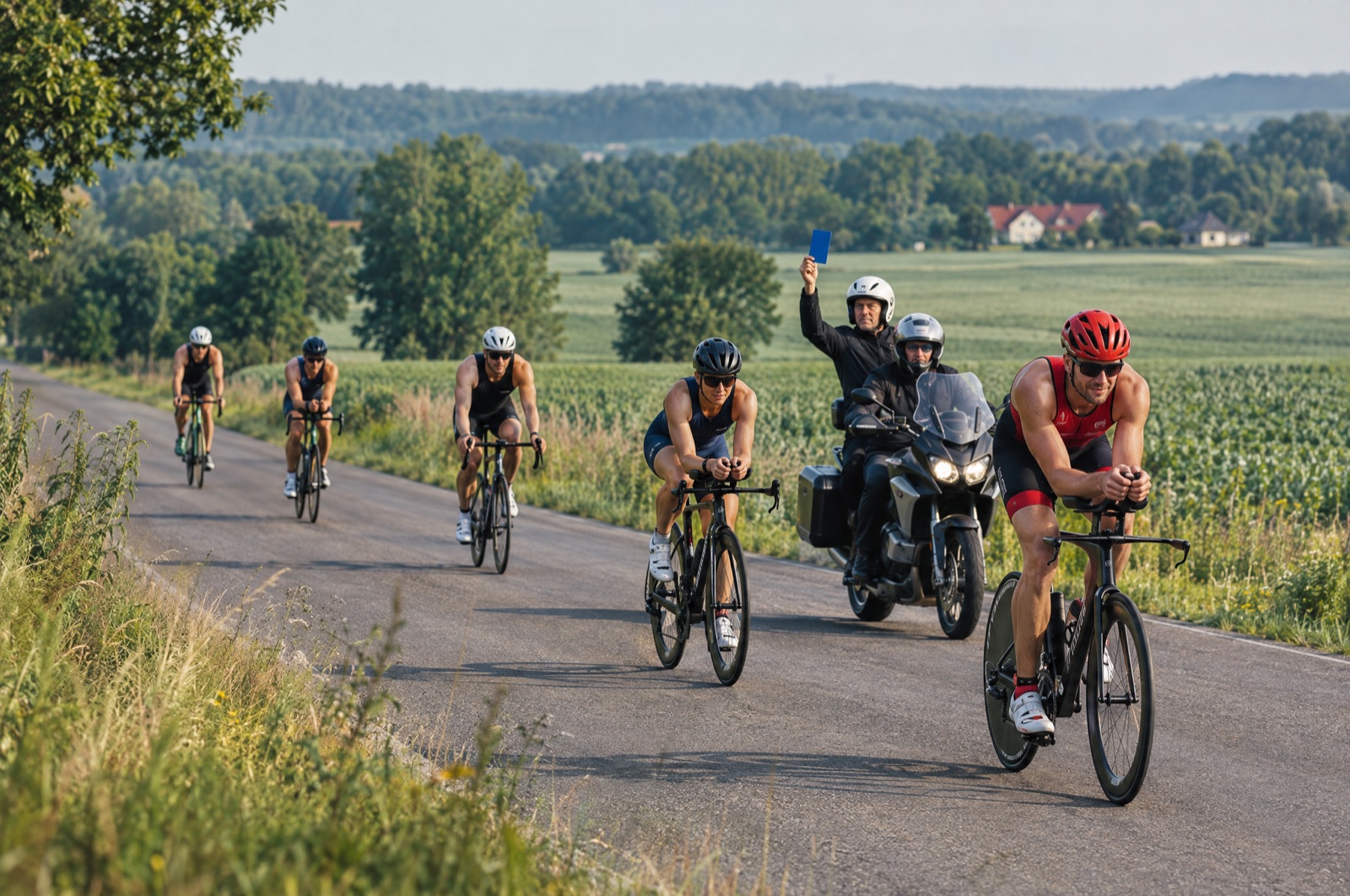
At a federation race you follow the national rule book, based on World Triathlon. At IRONMAN races the brand's rules apply. The difference between them can decide a result or a disqualification, so read the athlete guide before the start.
| Question (age-group athletes) | World Triathlon | IRONMAN |
|---|---|---|
| Wetsuit forbidden | From 22°C (71.6°F) up to 1,500 m, from 24.6°C (76.3°F) on longer swims, 60 and over from 24.6°C | Typically allowed up to 24.5°C (76.1°F). Between 24.5 and 28.8°C (83.8°F) only without eligibility for awards and slots |
| Wetsuit mandatory | At 15.9°C (60.6°F) and below | Typically below 16°C (60.8°F) |
| Draft zone | 12 m, 25 seconds to pass | 12 m, 25 seconds to pass |
| Drafting penalty at long distance | 3 minutes, in the penalty box | 3 minutes, in the penalty tent. Three cards mean disqualification |
| Drafting penalty at middle distance | 2 minutes | 2 minutes in 70.3 |
| Cameras and headphones | Banned | Banned, cameras since March 2, 2026 |
The table covers non-drafting races, and the IRONMAN column shows the brand's general rules, which the athlete guide of each race can adjust. At shorter distances the World Triathlon drafting penalty is 1 minute in a standard distance race and 30 seconds in a sprint, shown with a blue card. IRONMAN professionals have raced since March 2, 2026 with a 20 m zone and 45 seconds to pass. Age-group athletes stayed at 12 m, but the change can affect them on the course: you may not ride into the gaps between professionals who are riding at legal distances. You have to stay 12 m behind the group or pass all of it, with 45 seconds for each rider.
One rule catches age-group athletes out more than any other: both rule books ban headphones and cameras for the whole race, the run included. Federations also limit how much fluid you may mount on the front of the bike and behind the saddle, so check the current figures before you fit a new hydration system.
National rule books add their own differences. USA Triathlon, for example, allows wetsuits up to 78°F (25.6°C). Between 78°F and 84°F (28.9°C) you may wear one but you are no longer eligible for awards, and above 84°F wetsuits are not allowed. At its national championships the limits follow World Triathlon: wetsuits are forbidden from 76.2°F (24.6°C) and mandatory at 60.6°F (15.9°C) and below. The rules of the specific race take precedence.
What this means for you
- Choose a goal, not a brand. For a first race a local event is usually best. See which distance fits your starting point and the page for beginners.
- Check who organizes the race. The license, the rules and the refund terms depend on it.
- If you dream of the national age-group team, plan the season to your federation's calendar. Find the selection policy early, join as an annual member and enter the qualifying races before they fill.
- If you dream of Kona, you will build the whole year around the brand's calendar and slot rules. Start with registration and preparing for an Ironman.
- 2027 brings new names. Check the rules of a Challenge or T100 race before you pay.
For people who want to prepare for a specific race, IMI runs training in an app with a real coach and a plan updated every week. You will find more in the triathlon training plans.
Frequently asked questions
What is the difference between World Triathlon and IRONMAN?
World Triathlon is the federation recognized by the IOC, responsible for the rules and the Olympic Games. IRONMAN is the brand of a private company owned by Advance. The first is the way to the Olympics and the age-group national team, the second to Kona.
Who owns IRONMAN in 2026?
Advance, a private family-owned group and the owner of Condé Nast. The purchase from Wanda Sports for 730 million dollars, with Orkila Capital as co-investor, closed in 2020. As of November 2026.
Has World Triathlon merged with the PTO?
No. It is a commercial partnership. The federation keeps its authority over the sport and the titles, and the PTO uses the rights to them within the Triathlon World Tour.
What is T50?
The new name of the World Triathlon Championship Series from 2027. It is a professional series, and mass-participation races are planned alongside many of its rounds.
Do I need a license to do a triathlon?
At a race sanctioned by a national federation, yes: either an annual membership or a one-day license bought with your entry. Independent organizers may not require one.
Should I buy a one-day license or an annual membership?
For one or two races a year a one-day license is usually enough. From about three races the annual membership tends to be cheaper, and it is required if you want to race national championships or qualify for the age-group team.
Is my triathlon license valid in other countries?
Only where the organizer accepts it. Germany, France and Italy, for example, recognize licenses of other national federations at many races. Confirm it before you enter, above all at brand races.
Does a triathlon license include insurance?
It depends on the federation. Some day licenses cover only liability toward others during the race, some add personal accident cover and some include no personal insurance. None replaces travel or medical insurance.
How do I qualify for the age-group world championships?
Through your national federation. You earn a place on its age-group team by ranking or at qualifying races, hold its annual membership and race in national kit.
Is the IRONMAN World Championship an official world championship?
It is the championship of a private race series, not a title governed by World Triathlon. Under a 1998 agreement the company may use the name as its trademark.