Contents
- Start with the goal, not with the week
- The phases of a road cycling training plan, by climate and hemisphere
- Count back from the date of the event
- Intensity distribution: what the research says
- Power and heart rate in every phase
- W/kg: what 2 kg gives you and what 10 W gives you
- The week in numbers, not a schedule
- Fatigue resistance: what a fresh test will not show
- How to judge progress without fooling yourself
- Two goals in a season and the racing period
- Tapering: how to cut the load before an event
- Fueling in season: what a long ride changes
- Events and calendars around the world
- The most common mistakes in road cycling plans
- Frequently asked questions
Choose your plan
Start with the goal, not with the week
First decide what you want to happen and when. Only then count intervals. Each of the goals below needs different preparation:
| Season goal | What decides it | Where you put the emphasis | The most common trap |
|---|---|---|---|
| Amateur road race with a mass start | Repeated power surges and riding in a bunch | Short hard efforts, cornering, working in the peloton | Training only solo |
| Gran fondo, sportive or other long event | Steady power for several hours and eating on the bike | Long rides, tempo, climbs, fueling | Starting too fast in a big group |
| Time trial | Threshold power and aerodynamics | Long threshold repeats, position | Training threshold in a position other than the race one |
| Mountain event | W/kg for 20–60 minutes | Climbs, tempo, descents | Losing weight at the expense of power |
| Fitness without an event | Consistency and enjoying the riding | Base, strength, variety | Nothing to measure progress against |
Without an event, set your own checkpoint, such as the same climb in the same gear or a test every few months.
For most goals a block of 12–16 weeks works well. A shorter one is usually enough to sharpen fitness, but not to build a base and raise your threshold. A season with several peaks is several blocks spread over 6–10 months. Many riders improve a lot on 6–10 hours a week if they leave themselves time to recover.
The phases of a road cycling training plan, by climate and hemisphere
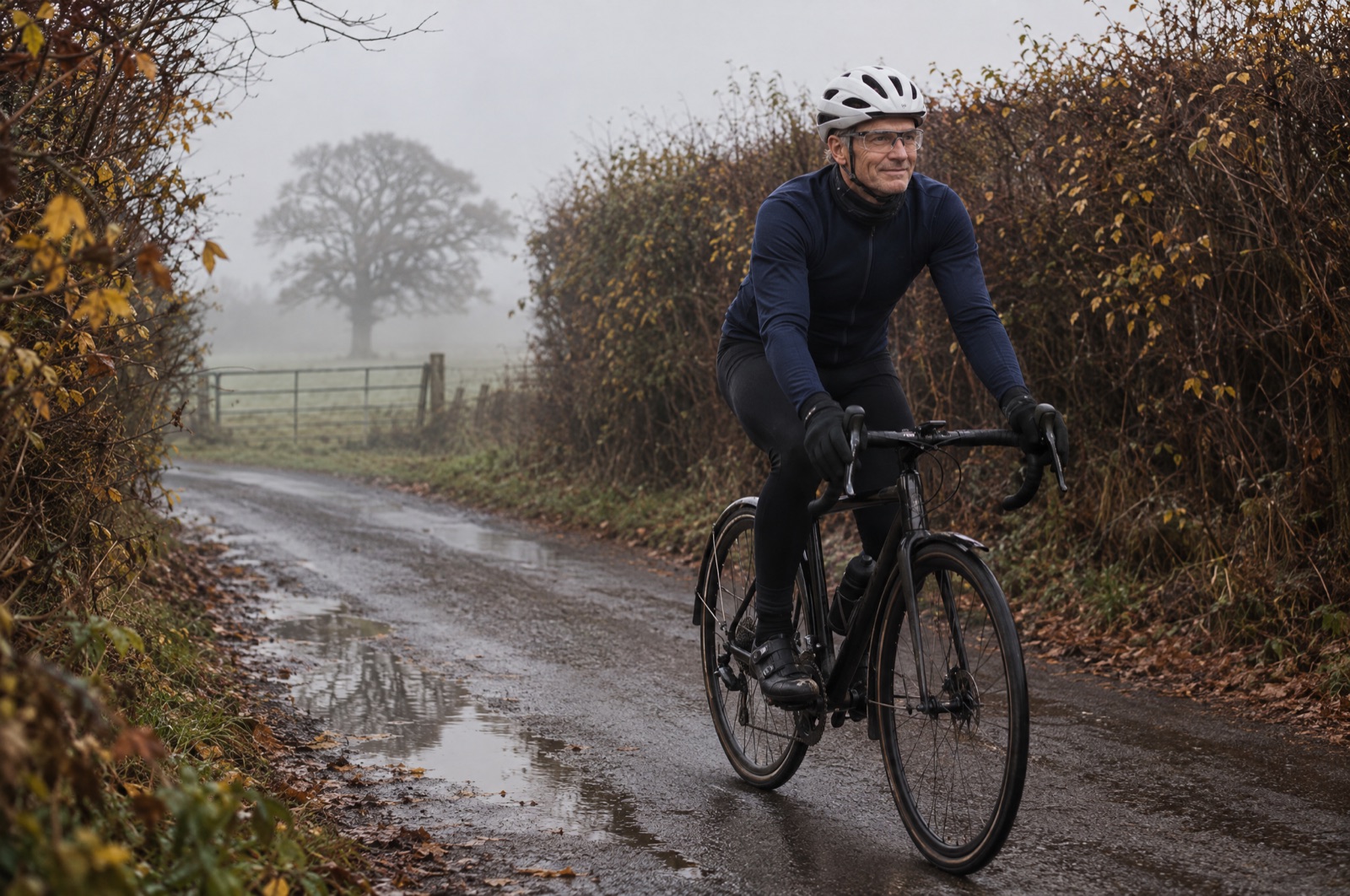
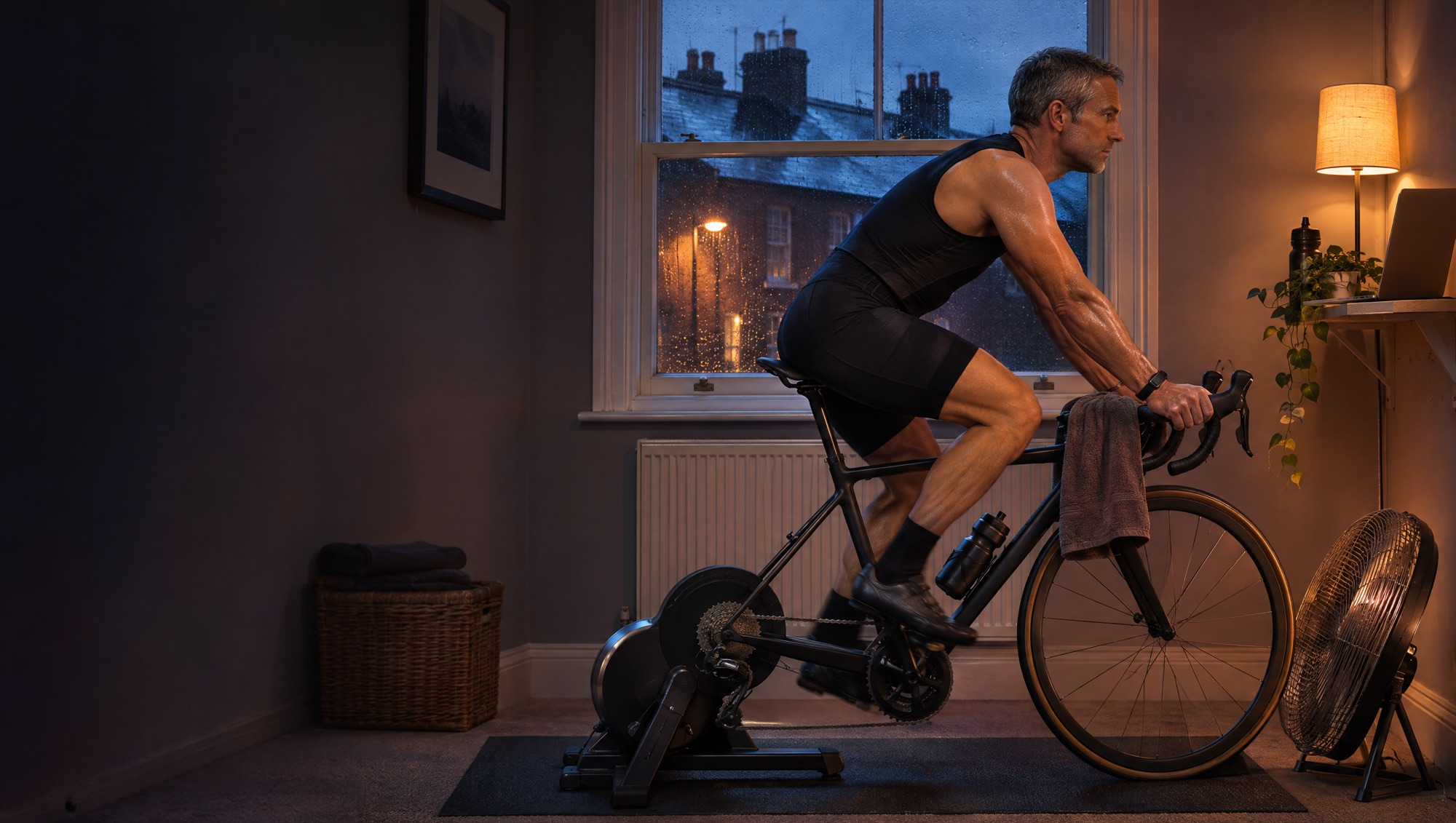
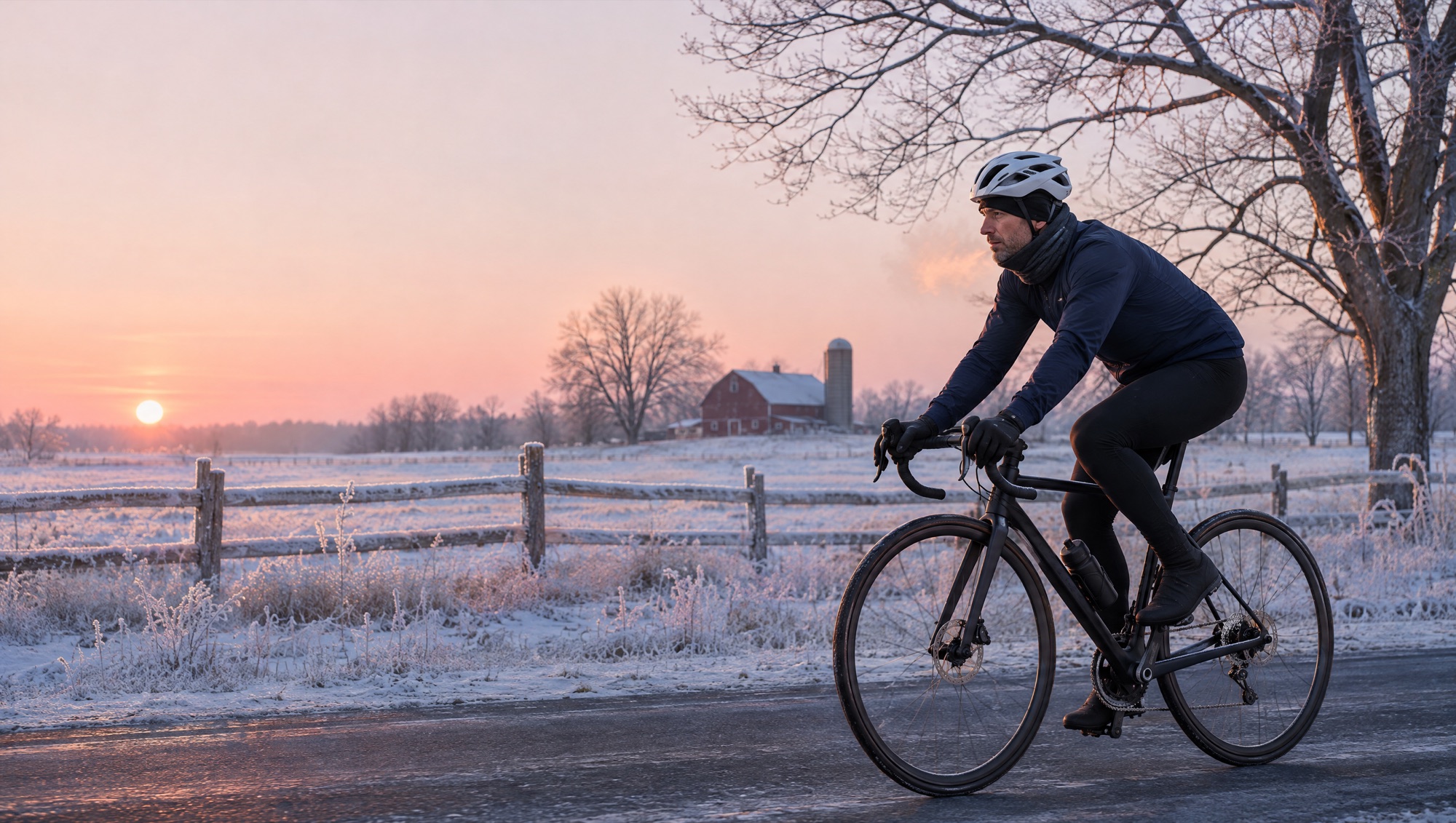
The calendar is set by the weather, and "winter" means very different things. In Minneapolis an average January day stays well below freezing. In London it usually stays above freezing but is often wet. In Melbourne the coldest month is July, and its days are cool, not cold. Quality work on the road is close to impossible in the first case, wet but possible in the second and comfortable in the third, so the same phases need a different emphasis depending on where you live.
| Phase | Northern hemisphere, summer goal | Southern hemisphere, summer goal | Aim | What dominates |
|---|---|---|---|---|
| Transition | After the last event, often October and November | Often April and May | Rest for head and body | Unstructured riding, other sports, time for everything the season pushed aside |
| Base | November to February | May to August | Aerobic endurance, strength | Easy hours, the gym, the trainer, other sports |
| Build | February to April | August to October | Threshold and aerobic power | Intervals, longer rides, the return to the road |
| Specific | The last 4–8 weeks before the goal | The last 4–8 weeks before the goal | Effort close to the event | The course, pacing, eating, group riding |
| Taper | The last 2 weeks | The last 2 weeks | Freshness without losing fitness | Less volume, intensity kept |
The dates move with the goal: for an event in early summer the base ends sooner than for one in early autumn. In the tropics, where there is no cold season, the same phases are usually arranged around the wettest or hottest months instead.
How long the transition should last
A reasonable reference point is 4–6 weeks of easier riding, of which up to two weeks can be a complete break. A longer break costs too much: a 2024 review of studies shows VO2max in trained people falling by about 4% after 3 weeks of complete rest and by about 10% after 5 weeks. The same review cites a 7% fall after only 12 days in a group of runners and cyclists.
So a short pause does not ruin a season, but a month of inactivity is expensive. In one study, adding one hard session every 7–10 days to easy riding protected performance through an 8-week transition period better than easy riding alone. The participants were well trained, so the result may not carry over to beginners.
Base in winter: how much intensity
The debate about intensity in winter comes down to how much time you have. The classic base, in which intervals wait until late winter, grew out of the training of professionals, who ride many times more hours than most amateurs. At about 8 hours or less, shorter intervals in winter can make more sense, for example in cycles of 8 weeks of harder work and 4 easier weeks.
At 8–10 hours a week and more, the classic base is realistic. At 5–6 hours, add intensity in moderation, because easy riding is still needed. The details are on the page about winter cycling training.
Count back from the date of the event
Put the event date in the calendar first, then work back through the phases. This is how it looks for three typical goals. The dates are approximate.
| Phase | Event in mid-June, northern hemisphere | Event in mid-August, northern hemisphere | Event in mid-March, southern hemisphere |
|---|---|---|---|
| Taper, 2 weeks | From early June | From early August | From early March |
| Specific, 4–8 weeks | Mid-April to the end of May | Mid-June to the end of July | Mid-January to the end of February |
| Build | February to April, mostly indoors in a cold climate | April to June, already on the road | November to January, on the road in early summer |
| Base | November to January | December to March | August to October |
A June goal in a cold climate forces you to do your climbing work on the trainer or at a training camp, while an August goal gives you two extra months of long days and dry roads. If you have a choice and your winter is long, you will prepare more easily for the later event. In the southern hemisphere an autumn event in March or April has the same advantage: the whole specific phase falls in summer. The price there is heat, so the long rides move to the early morning.
Intensity distribution: what the research says
The loudest debate is about the polarized model: most of the time truly easy, some of it very hard, and little work in the middle.
In a 2014 study, 48 well-trained athletes, including runners, cyclists, triathletes and skiers, trained for 9 weeks in one of four models. The distribution in the polarized group was about 68% of the time easy, 6% around threshold and 26% very hard. That group improved VO2peak by 11.7%, and the interval group by 4.8%. The threshold and volume groups showed no further gain.
That result comes with four caveats:
- There were only about 15 cyclists, split across four groups, and results were not reported for them separately.
- The outcomes were laboratory tests, not races.
- The authors themselves write that 11% in 9 weeks is a lot for trained athletes and has to be seen in the context of a whole year.
- A 2019 meta-analysis comparing the polarized and threshold models found a moderate effect in time trials, but rested on only 3 studies.
Newer analyses temper the enthusiasm. A 2024 meta-analysis of 17 studies (437 people) showed an advantage only for VO2peak, in programs shorter than 12 weeks and in highly trained athletes, with no effect in time trials. A 2025 analysis of data from 348 people found no advantage over the pyramidal model, which has the most easy work, less moderate work and the least hard work. For VO2max the level of the athlete mattered: competitive athletes may gain from the polarized model, and recreational ones are more likely to gain from the pyramidal. A 2023 review also did not identify a best periodization model for cyclists over 8–12 weeks, at volumes of about 8–12 hours a week.
The conclusion is more modest than the slogans online. The polarized model may help because it enforces what most riders lack: easy days that leave you fresh enough to ride hard. The biggest mistake remains riding moderately hard every day.
Long or short intervals
A 2015 study compared, over 10 weeks with two hard sessions a week, short repeats (sets of 30 s of work and 15 s of rest) with classic 5-minute intervals at a similar effort. VO2max rose by 8.7% and 2.6% respectively, and the short repeats had a moderate or large advantage in every test, from 30 seconds to 40 minutes. There were only 9 and 7 cyclists in the groups, though, and later work covers short periods and very well-trained athletes. The 30/15 sets work well on the trainer, but don't throw out long repeats, especially before a time trial or a long climb.
Power and heart rate in every phase
A power meter does not replace heart rate. This division of roles works in most seasons:
| Phase | Main signal | What you watch alongside it |
|---|---|---|
| Base | Heart rate: you ride in the zone and make sure it does not creep up | Power, which slowly rises at the same heart rate |
| Build, early season | Power in the intervals | Heart rate and breathing on endurance rides |
| Peak of the season | Power in work on your strengths | Heart rate in recovery weeks and on easy rides |
Taking 95% of a 20-minute test is an approximation. For recreational riders a multiplier of 0.88 fits better, and for trained riders 0.92. Without a power meter, train by heart rate and feel. In your first seasons consistency brings the most anyway.
Calculate heart rate zones from threshold, not from maximum heart rate. A simple test is a 30-minute effort from which you take the average heart rate of the last 20 minutes. A threshold set too low will make a normal heart rate look like drift.
Coggan power levels
The most widely used division was described by Andrew Coggan. The percentages are taken from threshold power, and heart rate from threshold heart rate. The boundaries are a convention, as Coggan himself stresses, because the body does not switch in steps.
| Level | Power, % of FTP | Heart rate, % of threshold | How it feels |
|---|---|---|---|
| 1. Active recovery | below 55% | below 68% | Easy conversation, no effort in the legs |
| 2. Endurance | 56–75% | 69–83% | An "all day" pace, conversation still possible |
| 3. Tempo | 76–90% | 84–94% | Conversation becomes halting, focus needed |
| 4. Threshold | 91–105% | 95–105% | Conversation difficult, usually blocks of 10–30 minutes |
| 5. VO2max | 106–120% | above 106% | No conversation, usually intervals of 3–8 minutes |
| 6. Anaerobic capacity | above 121% | not applicable | Repeats from 30 s to 3 minutes |
| 7. Neuromuscular power | not applicable | not applicable | Short sprints and accelerations |
On the road the average often lies. A mass-start race frequently has an average power in level 3 and still takes more out of you than steady training at that level, because it is made of surges and pauses.
W/kg: what 2 kg gives you and what 10 W gives you
Many riders start their preparation with a diet. We calculated whether that is a good choice. Assumptions: a 75 kg (165 lb) rider, an 8 kg (17.6 lb) bike, 250 W, CdA 0.32 m², rolling resistance coefficient 0.005, air density 1.2 kg/m³, drivetrain efficiency 97.5%. These are our calculations from the power equation, not a field measurement.
| Scenario | 8 km (5 mile) climb at 7% | 40 km (25 miles) on the flat |
|---|---|---|
| Baseline: 250 W, 3.33 W/kg | 34:52, 13.8 km/h (8.6 mph) | 65:30, 36.6 km/h (22.7 mph) |
| 2 kg (4.4 lb) less: 3.42 W/kg | about 44 s gained | about 6 s gained |
| 10 W more: 3.47 W/kg | about 74 s gained | about 57 s gained |
On the climb 10 W gives about 1.7 times more than 2 kg, and on the flat about 9.5 times more. Gradient changes little here: at 12% the advantage of the 10 W is still about 1.6 times, because 10 W is 4% of the power and 2 kg is 2.4% of the mass with the bike. Into a headwind, mass means even less. For most people, work on power therefore comes before weight loss, and the two are hard to manage at the same time.
Why the same W/kg does not mean the same time
We compared two riders with the same W/kg, 3.33. The first weighs 60 kg (132 lb) and produces 200 W, the second weighs 90 kg (198 lb) and produces 300 W. Both ride an 8 kg bike, with a CdA of 0.29 and 0.37 respectively.
| 60 kg, 200 W | 90 kg, 300 W | |
|---|---|---|
| 8 km climb at 7% | 35:47, 13.4 km/h (8.3 mph) | 34:19, 14.0 km/h (8.7 mph) |
| 40 km on the flat | 68:13, 35.2 km/h (21.9 mph) | 64:42, 37.1 km/h (23.1 mph) |
The heavier rider wins in both scenarios. On the climb the bike helps: the same 8 kg is a smaller addition to their mass than to the lighter rider's. On the flat, absolute watts decide, because air resistance does not grow in proportion to mass. So judge W/kg together with the profile of the course.
Level tables
Tables that sort W/kg into levels from beginner to professional give only a rough orientation, and they ignore the effects of body mass and course profile shown above. Your own numbers from month to month tell you more, as the section on judging progress below explains.
The week in numbers, not a schedule
We don't publish days or ready-made weeks, because a plan starts from your calendar. The proportions below let you judge whether your week makes sense.
| Time in the week | Hard sessions | Long ride | What the limit is |
|---|---|---|---|
| 4–6 hours | 1–2 | One, if the weekend allows | Every session has to have a purpose |
| 6–10 hours | 2 | One, longer at the peak | Recovery and easy days |
| Over 10 hours | 2–3 | One or two | Sleep, work and the risk of overload |
This is our editorial reference point, not a standard from research. Two elements weigh more than the number of hours:
- Lighter weeks. In the 2014 study mentioned above, blocks consisted of two harder weeks and one recovery week. Many plans use two to one or three to one. The choice depends on how you tolerate the load.
- Strength. Two sessions a week in winter and one maintenance session in season is the pattern with the most research behind it. The details are in the article on winter training.
A week built for you cannot come from a table. At IMI that is the work of a coach, who updates the plan every week after reviewing your workouts.
Fatigue resistance: what a fresh test will not show
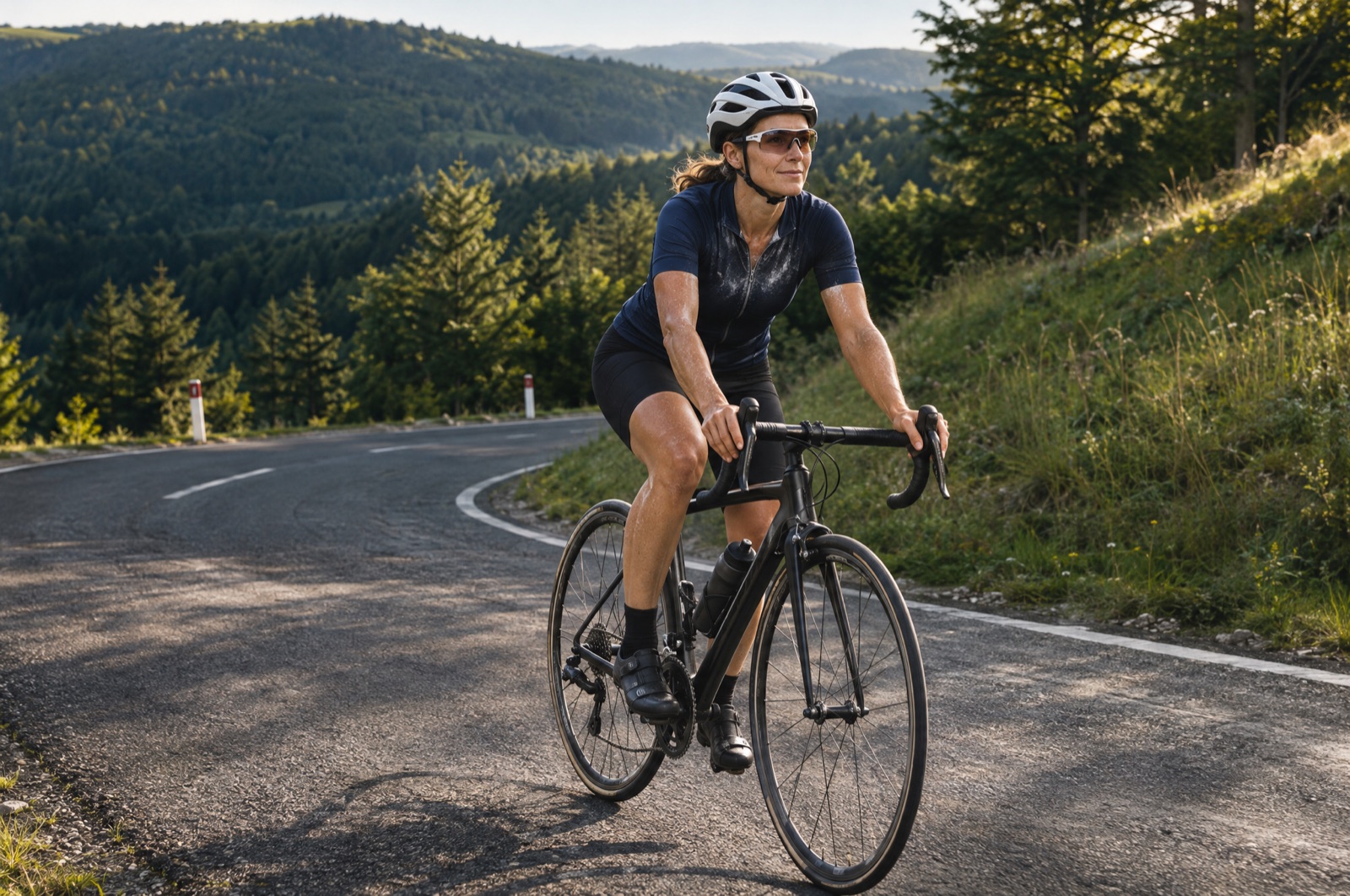
FTP is measured fresh, and a race is decided after several hours. Researchers call the ability to hold power despite fatigue durability, or fatigue resistance. In a 2022 analysis of 112 professionals, there were no consistent differences between the WorldTour and ProTeam groups when fresh. They appeared after accumulated fatigue, especially in efforts of 5 minutes and longer.
The same holds for amateurs. In a 2025 study, 14 cyclists trained 9.6 hours a week on average. After 1,000 kJ of work, power in a 20-minute effort fell by 6.5% in the better performers and by 12.5% in the rest. The group was small, but the conclusion fits the road: before a long event, long rides with a harder section near the end will tell you more than another fresh test.
How to judge progress without fooling yourself
Fitness does not rise in a straight line. With a coefficient of variation of about 2.9% for the 20-minute test, a change of 5–8 W at an FTP of around 260 W can be an ordinary difference between days. The repeatability of a power meter is about 1.2%, but once you change the device the comparison loses its meaning.
So look at several indicators at once:
- Heart rate at the same power on easy rides in similar conditions. It should slowly fall.
- A fixed segment. The same climb, similar wind and body mass, with the time and average power written down.
- The end of a long ride. Whether the last hour looks like the first, or the power falls apart.
- How it feels. Whether what was hard at the start of the block is moderate three months later.
- Recovery. How many days you need after a hard session.
If these signals move in one direction for several weeks, the change is most likely real. If only one is rising, wait for more data.
Two goals in a season and the racing period
There is usually one main goal, and the rest are training events. If you have at least several weeks between two important dates, plan a short recovery, a maintenance block and a second taper. If they are a couple of weeks apart, the second event runs on the fitness from the first. You will not build new fitness in that time.
In season, strength work moves to maintenance. About one session a week of low volume and high intensity is usually enough. Races supply intensity themselves, so it is easy to overdo it in race weeks. A hard race on Sunday counts as the main session of the week.
What the bunch gives you in a race
In a mass-start race, power is half the story. In a 2018 simulation, in the middle and at the back of a peloton of 121 riders, air resistance fell to 5–10% of the value for a lone rider. Holding a sheltered place near the front is a skill you have to practice. A plan for a race therefore has to include riding in a group.
Tapering: how to cut the load before an event
Tapering is a deliberate reduction of load before an event. A 2007 meta-analysis of 27 studies identified as most effective a two-week taper with an exponential reduction in volume of 41–60%, without changing the intensity or frequency of training.
Two typical mistakes:
- Cutting volume too late. A last big ride just before the event adds nothing, and the fatigue stays.
- Dropping intensity. A week of nothing but easy riding often ends with heavy legs. Short hard efforts stay in the plan. There are just fewer of them.
The meta-analysis covered various sports, so treat it as a starting point. With low volumes and a secondary event, a few lighter days are enough. For an event on a Sunday, the last harder, short effort usually falls in the middle of the week.
Fueling in season: what a long ride changes
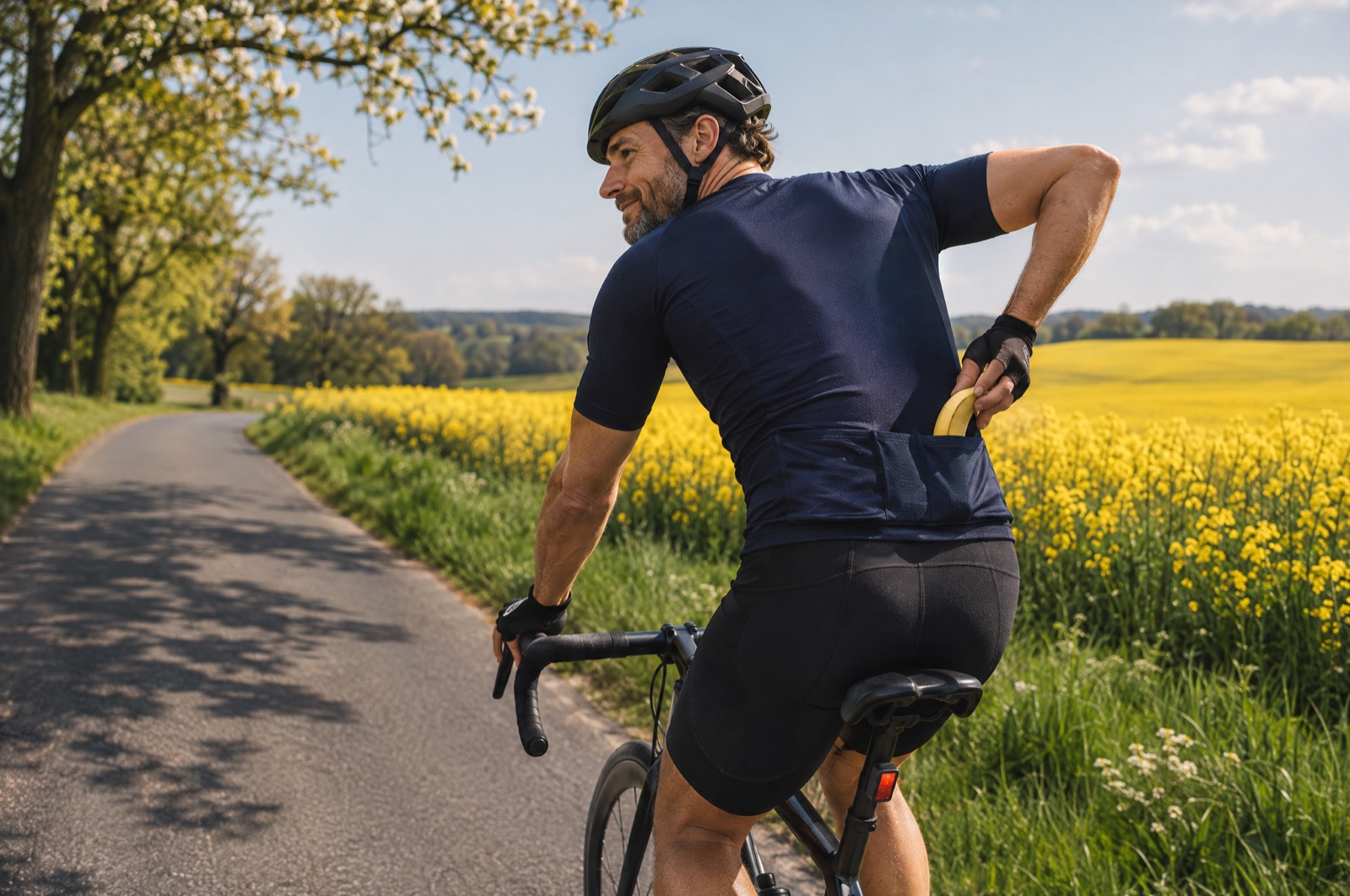
On the road, eating is part of the plan, and the long ride is the best chance to test it. For efforts longer than 2.5 hours the upper reference point is up to 90 g of carbohydrate per hour, but values that high are not used without preparation. Start with less and raise it in training.
Do the sum before the event. A 109 km (68 mile) course at 25 km/h (15.5 mph) takes about 4 hours 20 minutes. At 60 g an hour you need about 260 g of carbohydrate, which is roughly ten gels of 25 g each, or two bottles of drink (about 30 g each), six gels and two bananas. At 20 km/h (12.4 mph) the ride takes almost five and a half hours and the need rises to about 330 g. On a hard climb the stomach works less well, so eat on the flatter sections.
Nothing new on event day: tested products, a tested eating rhythm, a tested way of reaching for the bottle in a group. A gel you have only opened on the trainer can be awkward to handle in a bunch.
Events and calendars around the world
Mass-participation road events are called gran fondos, sportives, cyclosportives or century rides depending on the country, and four examples show how different the demands can be. Dates and entry rules change every year, so check them with the organizer before you build a season around one.
| Event | Where and when | Course | What it means for the plan |
|---|---|---|---|
| Cape Town Cycle Tour | South Africa, March | 109 km with about 1,200 m of climbing | About 11 m of climbing per kilometer, a rolling course ridden in big groups. The build-up falls in the southern summer, or indoors if you travel from the north |
| Maratona dles Dolomites | Italy, early July | 138 km with 4,230 m of climbing on the long course, with shorter courses of 106 km and 55 km | About 30 m of climbing per kilometer on the long course, so W/kg, gearing and descending decide. Most places are allocated by a draw |
| Taiwan KOM Challenge | Taiwan, October | 105 km from sea level to 3,275 m | One climb that lasts for hours: steady pacing, eating while climbing and thin air near the top |
| UCI Gran Fondo World Series | Qualifying events in Europe, Asia, Africa and the Americas: 32 of them led to the 2026 world championships | Differs from event to event | Only the front of each age group qualifies for the world championships (the top 25% in the 2026 cycle), so the effort is a race, not a ride |
Count back from the date as in the table above. For an event in mid-June in the northern hemisphere, a block of 12–16 weeks starts between late February and late March, so in a cold climate the climbing work falls on the trainer or a training camp. For Cape Town in March, the same block starts between late November and mid-December, in the southern early summer.
Licensed road races and criteriums are listed in the calendars of national federations, such as USA Cycling, British Cycling or AusCycling.
Climbs when you live somewhere flat
Plenty of riders have no 20-minute climb near home and an event with thousands of meters of climbing ahead. A long uphill effort can still be prepared to a large extent without mountains. On the indoor trainer you ride blocks of 8–20 minutes at level 3 and 4 power, at a cadence close to the one you will use on the climb. Outside you can do the same work into a headwind, and short rises and overpasses are good for repeats. The one thing you cannot rehearse without mountains is descending, which is why a trip to the course a few weeks before the event is worth more than one more block at home.
Check your gearing too, because it often decides whether you reach the top calmly. We calculated it for a 75 kg rider, an 8 kg bike and a wheel circumference of 2.1 m. At 180 W on a 7% gradient you ride at about 10 km/h (6.2 mph). In 34×28 that is about 66 revolutions per minute, and in 34×34 about 80. At 10% the speed falls to about 7 km/h (4.3 mph) and the cadence in 34×28 to 48. At 250 W and 7% the same gears are much more comfortable: 34×28 gives about 90 revolutions. A cassette with a wider range, compatible with your rear derailleur, is often the cheapest improvement before a mountain event.
The most common mistakes in road cycling plans
- Every ride moderately hard. Too hard to recover from and too easy to give a clear stimulus.
- Peak fitness two months early. A good late winter on the trainer looks great in the data, and the goal is in summer.
- Testing too often. A test is a load and breaks the rhythm. A few times a season is usually enough.
- Copying a professional's week. A professional's plan cut down to 8 hours is no longer the same plan.
- No group riding before a race. Power does not replace the skill of riding on a wheel.
- Losing weight in the build phase. Body mass falls, but power can fall with it, and the calculations above show that is a bad trade.
- Changing the plan after one weak week. A plan is judged over many weeks.
- No rehearsal on the profile of the event. Four flat hours will not prepare you for a day in the mountains. Ride at least one long session with many climbs, even if it takes a trip to the hills or a simulation on the trainer.
Frequently asked questions
How many weeks does a road cycling training plan take?
For one goal, usually 12–16 weeks, counting from a solid base. After a break, add more time. A full season is several blocks spread over 6–10 months.
How many times a week do I need to ride?
For most people a reasonable range is 3–5 times, but a lot depends on the length of the rides and on recovery. Two good hard sessions and one long ride often do more than riding every day without a purpose.
How many hours a week should I train on the bike?
Many amateurs improve a lot on 6–10 hours a week, as long as they leave time to recover. On 4–6 hours every session needs a clear purpose, and above 10 hours sleep, work and recovery become the limit.
Do I need a power meter to follow a cycling training plan?
No. A power meter makes intervals and comparisons easier, but a plan can be built on heart rate and feel. Power meters have errors of their own too: in one study 6 of 54 devices were off by more than 5%.
When should I start training for the cycling season?
If your main goal falls in summer, a reasonable start is late autumn, which means November in the northern hemisphere and May in the southern. You need several months of regular work before the specific phase.
How do I do a power test during the season?
After rest, in similar conditions and on the same power meter. Convert the 20-minute result with the right multiplier and compare it with your real training.
Can I train on an indoor trainer for most of the year?
Yes, if you practice technique and group riding on the road. We describe this on the page about the indoor trainer training plan.
What should I do after an illness?
Come back gradually and don't try to make up the missed sessions. After an infection with fever, or with any heart problem, discuss your return with a doctor.
Is a cycling plan different if I also run or do duathlon?
Yes. The phases stay the same, but the hard sessions of both sports have to share one week and one pair of legs. See the duathlon training plan for how the two are combined.